The slogan tee is the most direct form of communication in fashion. No metaphors, no abstract graphics — just words on cotton, broadcasting a message to every person you pass on the street. It's been doing this since before social media existed, and it's still more effective than any tweet.
The history of the slogan tee is really a history of dissent, humour, and identity compressed into a few words and printed on a flat surface. From the earliest political protest shirts to the meme-era designs flooding TikTok shops today, the format hasn't changed. What's changed is the speed at which a slogan goes from idea to ink.
The Punk Foundation
You can't talk about slogan tees without starting in 1970s London. Vivienne Westwood and Malcolm McLaren turned the t-shirt into a weapon — printing provocations that were designed to offend, challenge, and confront. The typography was deliberately rough, the messaging deliberately uncomfortable. These weren't designs meant to sell in volume. They were statements.
That DNA still runs through every good slogan tee. The best ones make you slightly uncomfortable. They force a reaction. Whether it's a political statement, a subculture reference, or a perfectly timed piece of absurdist humour, the goal is the same: make the reader think, even if only for a second.
Typography Is Everything
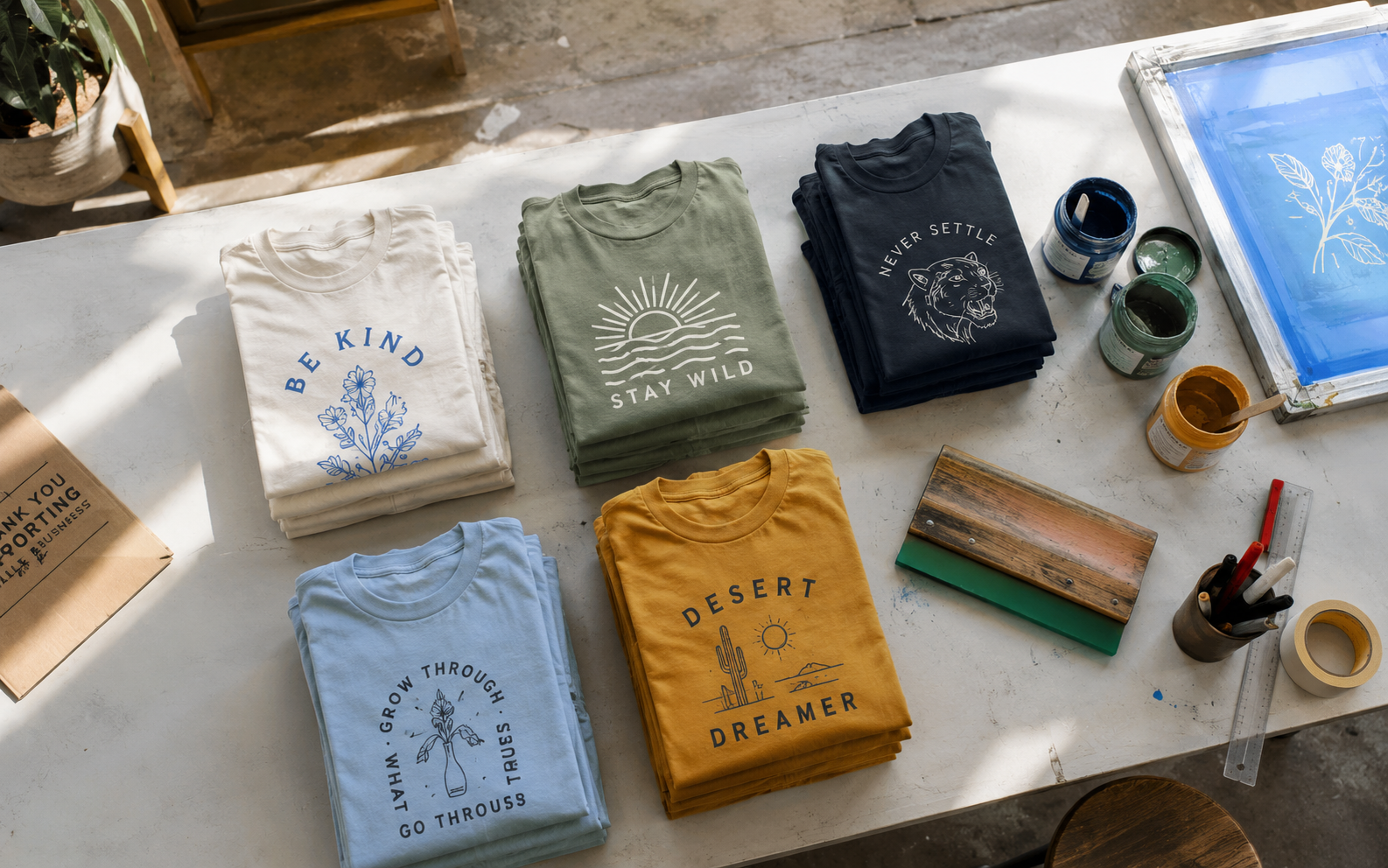
The difference between a great slogan tee and a forgettable one almost always comes down to typography. The words matter, obviously, but how they're set matters just as much. Font choice, weight, spacing, placement — these decisions determine whether a tee reads as considered design or a WordArt experiment from 2003.
The best slogan-focused brands understand this instinctively. They'll spend as long choosing a typeface as they do writing the slogan itself. Helvetica Bold centred on the chest says something completely different from hand-drawn script tucked into the bottom corner. The typography is the tone of voice.
The Meme Era
Social media compressed the lifecycle of a slogan tee from months to hours. A phrase trends on Twitter at 9am, and by noon someone has it on a Printful mockup. By the next morning it's being dropshipped from five different stores. This speed creates a lot of garbage, but it also creates moments of genuine brilliance — when the right phrase meets the right design at exactly the right cultural moment.
The problem is saturation. When everyone can print a slogan tee, the bar for what's worth wearing goes up dramatically. A clever phrase isn't enough anymore. It needs to be set well, printed on a blank that doesn't feel like a dishcloth, and arrive before the cultural moment has already passed. That's a harder brief than it sounds, and it's why the brands that consistently nail slogan tees tend to be small, fast, and obsessively detail-oriented.
The slogan tee will outlast every fashion cycle because it's not really fashion. It's publishing. Every tee is an edition of one, worn by an audience of everyone who sees you that day. Punk understood this. The internet amplified it. And the best designers working in the space today treat every slogan like it deserves the same care as a headline on the front page.